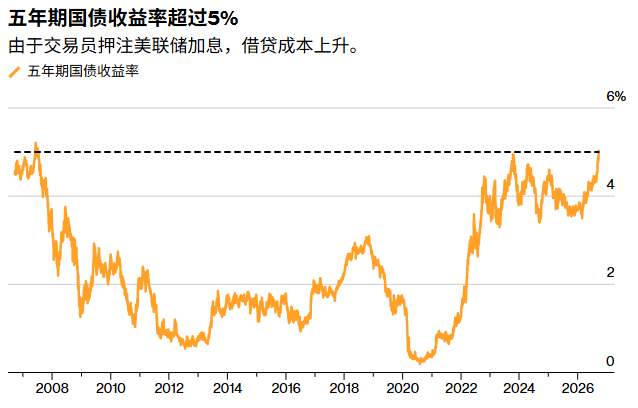
Although Kevin Warsh, the Federal Reserve chair nominated by President Trump, now faces renewed pressure to raise borrowing costs, Trump has reiterated that the U.S. should have the lowest interest rates in the world.
“We should pay—America is so strong—we should pay the lowest interest rates in the world, whatever their formula is,” Trump told reporters Sunday in Ireland, where he was attending the Irish Open.
Asked whether he expected central banks to raise rates at next week’s meeting, Trump replied, “I don’t know.” But bets in the interest rate futures market suggest the probability of a Fed rate hike at its September meeting is close to 90%.
Trump has repeatedly criticized former Fed Chair Jerome Powell, accusing him of being unwilling to cut borrowing costs more aggressively. Although Warsh has not faced the same pressure since taking over as Fed chair, Trump has expressed dissatisfaction with the Fed’s policy stance multiple times in recent weeks.
While voicing his discontent with the Fed, Trump suggested that Warsh might be constrained by what he described as a “politically charged” board. In early September, Trump also threatened that if the Fed did not lower borrowing costs, the U.S. would cut off trade with certain economies running trade deficits—though it remained unclear how such a threat would actually help reduce interest rates.
“I understand the formula better than anyone else. With the best credit system in the world, we’ve made other countries rich. We could shut it down in two minutes,” Trump said Sunday.
Later, when asked whether he would actually follow through on this threat, Trump responded, “Yes, I would do it to some countries.”
Growing political anxiety within the White House has intensified calls for easier monetary policy. Ahead of the midterm elections, polls show rising voter frustration over soaring living costs. Lowering interest rates—even if it takes months before the effects appear in mortgage or credit card bills—could provide Trump cover to hint at upcoming economic relief measures and shift blame away from the government.
“They are really caught between a rock and a hard place: either anger the president or damage their own credibility in the markets, and the latter could have more serious consequences for inflation down the road,” said Maurice Obstfeld, senior fellow at the Peterson Institute for International Economics and former chief economist at the IMF. “I think Warsh doesn’t want to be the Fed chair who yields to government pressure when the Fed’s mission is at risk.”